
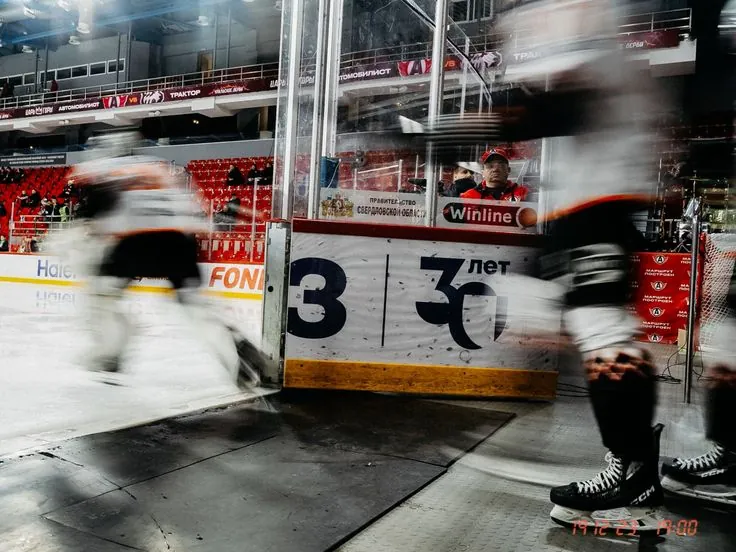
A power play in hockey is when one team has more skaters on the ice than the other because the opponent took a penalty. The usual power play is 5-on-4 and lasts two minutes for a minor penalty, or until the team with the advantage scores. In youth hockey and minor hockey, it's often where close games are won.
The first part of this guide covers the rules, for parents and new coaches. The rest is for coaches: a power play is five phases (the faceoff, the breakout, the entry, the setup and the attack), and most minor hockey power plays fail in the first three, long before anyone shoots.
The rules: what causes a power play and how long it lasts
Under Hockey Canada's playing rules:
- Minor penalty: two minutes (Rule 4.2). It ends early if the team on the power play scores: the minor with the least time remaining ends automatically (Rule 4.2(b)).
- Double minor: "2 + 2", four minutes. A goal during the first two minutes ends only the first minor.
- Major penalty: five minutes (Rule 4.4), served in full even if the other team scores.
- Coincidental penalties (equal penalties to both teams at the same time) don't create a power play (Rule 4.5).
- The goalie doesn't leave the ice for a minor penalty (Rule 4.2).
Two penalties at once create a 5-on-3, the biggest advantage in hockey. USA Hockey's rules declare a forfeit if a team falls below four players on the ice (Rule 201), so a third penalty waits until one of the first two ends.
What a good power play looks like, in numbers
- About 2 goals in 10 power plays. Mike Johnston and Ryan Walter write in Hockey Plays and Strategies that even the best units score on "only 2 out of every 10" power plays. The Coaches Site also calls anything above 20% a good power play.
- 15 to 20 seconds to reset. Johnston and Walter note that every time the penalty kill clears the puck, the power play needs 15 to 20 seconds to break out and set up again. On a two-minute power play, two clears cost a third of it.
That second number is the key to coaching a power play at minor hockey. The goal isn't a perfect formation. It's keeping the puck in the zone.
Power play percentage = power play goals ÷ power play opportunities × 100. Track it, but also track two numbers you control more: clean entries and shots per power play.
Phase 1: the faceoff
Most power plays start with a faceoff in the offensive zone. Enio Sacilotto lists faceoffs as the first of his 12 power play habits on The Coaches Site. Johnston and Walter put it in three words: "Win the draw!"
- Win it, and run a set play. Decide before the faceoff where the puck goes: back to the point for a quick shot, or to the half-wall to start the setup. Every player knows their spot before the puck drops.
- Lose it, and the clock starts. The penalty kill will try to clear. Your wingers' job on a lost draw is to stop that clear along the boards.
At U13 and up, one rehearsed faceoff play is worth more than a second formation.
Phase 2: the breakout against the penalty kill forecheck
When the puck is cleared, the power play starts again from its own end. Joseph Bertagna writes in The Hockey Coaching Bible that "one of the most important aspects of the breakout is timing." Forwards who leave too early stand still at the far blue line; forwards who leave too late let the forecheck in.
Hockey Canada's Coach 2 team play package teaches five breakout options with defined roles: Up (pass up the boards), Over (D-to-D), Wheel (the defenseman skates it around the net), Reverse (back to the partner going the other way) and Wrap. Its reminder to every player: "Check your shoulder for pressure and outlet."
At minor hockey, the regroup is the simplest power play breakout: the defenseman carries the puck behind the net, the forwards swing back through the neutral zone, and the team attacks with speed.
Phase 3: the zone entry
The entry decides whether the power play spends its two minutes in the offensive zone or chasing the puck. Nate Leslie of Leslie Global Sports separates entries into two families:
Dump-ins. A hard rim around the boards, a cross-ice dump or a soft chip into the corner. A dump only works if players arrive to win the puck: "All this is useless if you don't have that pursuit," Leslie says.
Carry-ins. Carry the puck through the area below the circles and set up at the half-wall. Leslie warns against carrying slowly behind the net, which gives the penalty kill time to set.
Two variations coaches teach:
- The drop pass (or "looper"). One player loops back and drops the puck to a teammate coming with speed. USA Hockey describes how the looper "stalls the four defenders", who have to stop and decide who to take.
- The mid-lane drive. In Hockey Canada's package, F1 attacks the blue line and drives to the net, F3 drives the middle lane, and F2 reads and either drives or fills the slot. The drive pushes the defenders back and opens the space behind them.
How to choose: if the penalty killers stand up at their blue line, dump it in, with pursuit. If they back off, carry it in.
Phase 4: the setup and the formations
Once the power play controls the puck in the zone, the players take their spots.
The 1-3-1
One defenseman at the blue line, three players across the middle (two on the half-walls and one in the slot, called the bumper) and one at the net front. Triangles everywhere, and a one-timer threat from both flanks. The most common setup in pro hockey today.
The umbrella
Three players across the top (both points and the middle of the blue line), two forwards low near the net. The puck moves along the top until a shooting lane opens, while forwards screen and tip. Easy to teach, and it suits younger ages.
The overload
Four players on one side (point, half-wall, low corner, net front) and one on the weak side. The power play outnumbers the killers on one side, then switches the puck quickly to the open player across.
Roles in every formation:
- Half-wall (flank): usually the best passer. Decides where the puck goes.
- Bumper: the quick option in the middle of the box, between the penalty killers.
- Net front: Sacilotto describes the job as taking "the goalie's eyes away": screens, tips, rebounds, and a short pass option when the killers collapse.
- Point: keeps the puck in and shoots through traffic, low and on net.
Phase 5: the attack: reading the penalty kill
A formation is a starting point, not a script. Sacilotto's rule: "take what the defence gives." In practice:
- If a penalty killer pressures the puck, the open player is behind him. Move the puck to that space before he recovers.
- If the box stays tight, move the puck around the outside, "quick on and off the stick," until a lane opens. Don't force a pass through the middle.
- If they give a shot, take it, ideally a one-timer, low, with the net front screening.
- Rotate players, not just the puck. When the top player and the flank switch spots, the penalty killers have to switch too, and one of them is usually late.
- Expect a second shot. On every shot, the net front and the low forward go to the net for the rebound.
The 5-on-3
Most teams switch to a box plus one for a 5-on-3: two players high, two low, one in the middle. The Coaches Site's 5-on-3 explainer adds two details: the defensemen "squeeze the space" to tighten the box, and the forwards deceive, looking one way and passing the other. A 5-on-3 is rare, so it doesn't need much practice time, but a team that has never rehearsed it usually wastes it.
How to teach the power play at each age
Joe Bonnett, quoted by USA Hockey, suggests starting power play concepts as early as 6U, through small games, and teaching formations like the overload and the 1-3-1 around 14U. A practical progression:
- U11 (Squirt): puck movement in small games. A 5-on-2 keep-away in a quarter of the ice teaches the habit behind every power play: move the puck, find the open player.
- U13 (Peewee): one formation (the umbrella or the 1-3-1), one entry and one faceoff play, for the whole season.
- U15 (Bantam) and up: reading the penalty kill, rotations, a second formation and a 5-on-3 setup.
Bonnett also suggests walking through setups off the ice, even in a parking lot with a ball, so ice time goes to reps, not explanations.
How to practice it: three drills
1. Build the power play against pressure
From Bertagna: the power play starts at the far blue line, the coach dumps a puck in, and penalty killers are added one at a time (2, then 3, then 4). Coaching point: timing on the breakout before anything else.
2. The 40-second power play
Also from Bertagna: 10 seconds of setup in the offensive zone, then the coach throws a puck into the defensive zone and the killers forecheck. The unit must break out, re-enter and set up again before time runs out. Coaching point: it trains the reset that costs 15 to 20 seconds in games.
3. Overload small game
3-on-2 on one side of the zone (Bonnett's idea), with a point player added. Coaching point: create the 2-on-1 on the wall, then switch the puck to the weak side.
How to review your power play on video
Five questions cover almost everything:
- Did we win the faceoff, and did the set play work?
- How many clears did we give up, and how many seconds did each one cost?
- Did the entry work, and was it the right type for how the killers stood?
- Did we take the shots the penalty kill gave us?
- Was someone at the net front for the rebound?
Coach's note: At minor hockey, most teams never review their power play on video, because finding the five or six power plays in a 60-minute game takes longer than the practice. Taggley's AI cuts every power play in under 40 minutes. Show the unit two clips, ask one of the five questions above and move on to the drill. For the full routine, see how to break down hockey game film in 15 minutes. For the other side of special teams, read what is a penalty kill in hockey.
Frequently asked questions
What does power play mean in hockey?
One team has more skaters on the ice because the other team is serving a penalty. The usual power play is 5-on-4.
How long is a power play in hockey?
Two minutes for a minor penalty, four for a double minor and five for a major. A minor ends early if the team on the power play scores; a major is served in full.
What is a good power play percentage?
Even the best units score on about 2 of every 10 power plays, according to Hockey Plays and Strategies. Above 20% is considered good.
What is the best power play formation for youth hockey?
The umbrella is the easiest to teach at younger ages. The 1-3-1 and the overload fit from around U15 (Bantam), once players can read the penalty kill.
Sources
- Hockey Canada, Playing Rules 2024-2026: Rules 4.2, 4.4, 4.5.
- USA Hockey, Rules and Resources: 2025-29 Official Rules, Rule 201.
- Mike Johnston and Ryan Walter, "Small details create a successful power play," Hockey Plays and Strategies (Human Kinetics)
- Joseph Bertagna, "Practicing the Power-Play Breakout," The Hockey Coaching Bible (Human Kinetics)
- Enio Sacilotto, "Want a Better Power Play? Master These 12 Habits!" (The Coaches Site)
- The Coaches Site, "Explained: 5-on-3 Power Play Formation"
- Nate Leslie, "Powerplay Zone Entry Options in Hockey" (Leslie Global Sports, October 24, 2020)
- USA Hockey, "Fostering Offensive Support & Puck Possession" (Michael Doyle, March 6, 2020)
- USA Hockey, "Special Teams Skills in Everyday Drills" (Mike Doyle, May 8, 2024)
- Hockey Canada, Coach 2 Team Play Package (hosted by BC Hockey)