
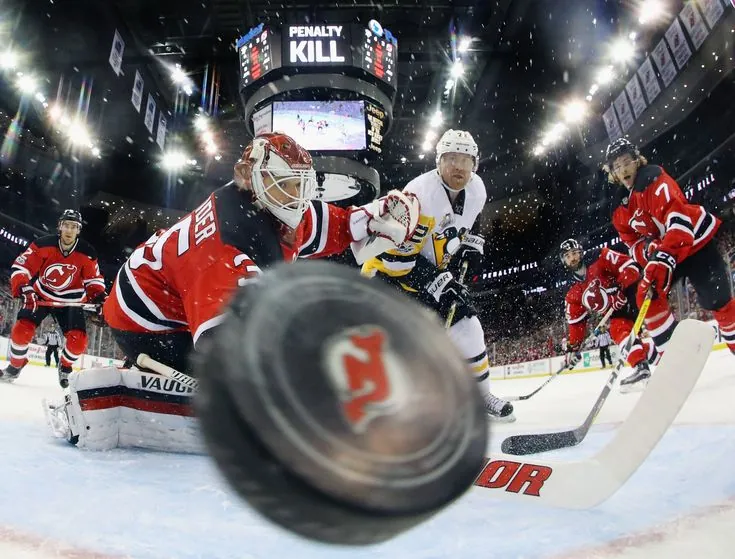
A penalty kill in hockey is the time a team plays short-handed because one of its players is serving a penalty. The four skaters left on the ice defend in a shape, usually a box or a diamond, block shooting lanes and clear the puck until the penalty ends. In youth hockey and minor hockey, a good penalty kill keeps close games close.
This guide covers the penalty kill formations, when to pressure and when to sit back, the forecheck, how to teach it at U11 and U13, three drills, and what a good penalty kill percentage looks like.
What is a penalty kill?
When a player takes a penalty, their team plays with one fewer skater, usually 4-on-5. The other team is on the power play. The short-handed team is "on the penalty kill." Its goal is simple: don't give up a goal before the penalty ends.
A minor penalty lasts two minutes and ends early if the power play scores (Hockey Canada, Rule 4.2). A major penalty lasts five minutes and is served in full (Rule 4.4), so a major means killing the whole five minutes even after a goal. For the full rules on penalties and the team with the advantage, read what is a power play in hockey.
Penalty kill formations: box, diamond, wedge and triangle plus one
The box
Two defensemen low in front of the net, two forwards high near the top of the circles, forming a square. The box protects the middle of the ice and the slot. It's the first formation every youth team should learn.
The diamond
One player high, two on the sides and one low in front of the net. The diamond pressures the top of the zone and works well against a power play that shoots from the point.
The wedge (or wedge plus one)
Three players form a triangle around the net and slot, and one forward pressures the puck carrier. It's built to stop the 1-3-1, where the danger is the player in the middle.
Triangle plus one (5-on-3)
When two players are in the box, three skaters form a tight triangle in front of the net. The priority is the slot: give up shots from outside, never from the middle.
Passive vs aggressive penalty kill: when to pressure
A passive penalty kill holds its shape and waits. An aggressive one attacks the puck. Most teams do both, using triggers:
- A bobbled puck or a bad pass: pressure.
- A player with his back to the play along the boards: pressure.
- A player with the puck facing the net and options on both sides: hold the shape.
Former NHL coach Trent Yawney wrote on NHL.com that a penalty kill should be "collectively aggressive" rather than four players running around on their own. When one player pressures, the other three shift with him.
What happens if your team takes a second penalty?
A second penalty during a penalty kill puts your team down two skaters: a 5-on-3, killed with the triangle plus one. It can't go further than that. USA Hockey's rules declare a forfeit if a team is reduced to fewer than four players on the ice (Rule 201), so a third penalty waits on the bench until one of the first two ends.
For the penalty kill, the 5-on-3 changes the job completely. Pressure stops. The three skaters protect the slot, block what they can and clear the puck at the first chance. If the first penalty ends while the second is still running, the penalty kill returns to the box at 4-on-5.
The penalty kill forecheck
The penalty kill starts before the power play enters the zone. The most common forechecks:
- 1-3: one forward pressures the puck carrier in his own zone, three players wait across the neutral zone.
- Forwards pressure: both forwards go after the puck to force a rushed pass or an offside.
- Trackback: all four players retreat and line up at the blue line to deny a clean entry.
Every power play entry that fails is 10 to 20 seconds off the penalty.
Teaching the penalty kill to U11 and U13
- U11 (Squirt): keep it to the box. Teach players to stay between the puck and the net and to hold their spot.
- U13 (Peewee): add stick position. Sticks on the ice in the passing lanes, especially the pass across the middle. Add one pressure trigger, like a bobbled puck.
- U15 (Bantam) and up: add a second formation (the diamond or the wedge) and a forecheck.
Three penalty kill drills
1. Box shuffle
Setup: 4 penalty killers in a box against 5 attackers who only pass, no shots, for 30 seconds. Rule: killers move as a unit with every pass. Coaching point: the box shifts together; nobody leaves a hole.
2. Stick in the lane
Setup: 2 killers against 3 attackers on one side of the zone. Rule: killers must keep their sticks on the ice in the passing lane, never reaching. Coaching point: blocking a pass beats chasing the puck.
3. Clear it out
Setup: coach dumps a puck into the corner; 4 killers against 5 attackers. Rule: the first killer to the puck must clear it out of the zone. Coaching point: a clear down the ice is 10 seconds of the penalty gone.
What is penalty kill percentage, and what is a good one?
Penalty kill percentage is the share of penalties a team kills without giving up a goal:
PK% = (times short-handed - power play goals against) ÷ times short-handed × 100
A team that was short-handed 20 times and allowed 4 power play goals has an 80% penalty kill.
In pro and junior hockey, Trent Yawney wrote on NHL.com that a penalty kill in the "low 80s percent" is decent. Minor hockey leagues rarely publish penalty kill stats, so track your own across the season. The trend matters more than the number.
Coach's note: The penalty kill is the hardest unit to review by hand: the clips are long, and the mistakes are small, a stick off the ice, a player a step out of the box. Taggley's AI cuts every penalty kill in under 40 minutes, so a coach can show the 20 seconds where the box collapsed instead of describing it. For a full routine, see how to break down hockey game film in 15 minutes.
Frequently asked questions
What does penalty kill mean in hockey?
It's the time a team plays short-handed because one of its players is serving a penalty, usually 4-on-5.
What is the best penalty kill formation for youth hockey?
The box. It's the easiest to teach and protects the slot. Add the diamond or the wedge from U15 (Bantam) up.
What is a good penalty kill percentage?
In pro and junior hockey, the low 80s percent is considered decent. In minor hockey, track your own percentage and look at the trend.
Sources
- Hockey Canada, Playing Rules 2024-2026: Rules 4.2 (minor penalties) and 4.4 (major penalties).
- USA Hockey, Rules and Resources: 2025-29 Official Rules, Rule 201 (minimum players).
- NHL.com, "Look deeper than stats to fix penalty kill" (Trent Yawney, October 30, 2024)