
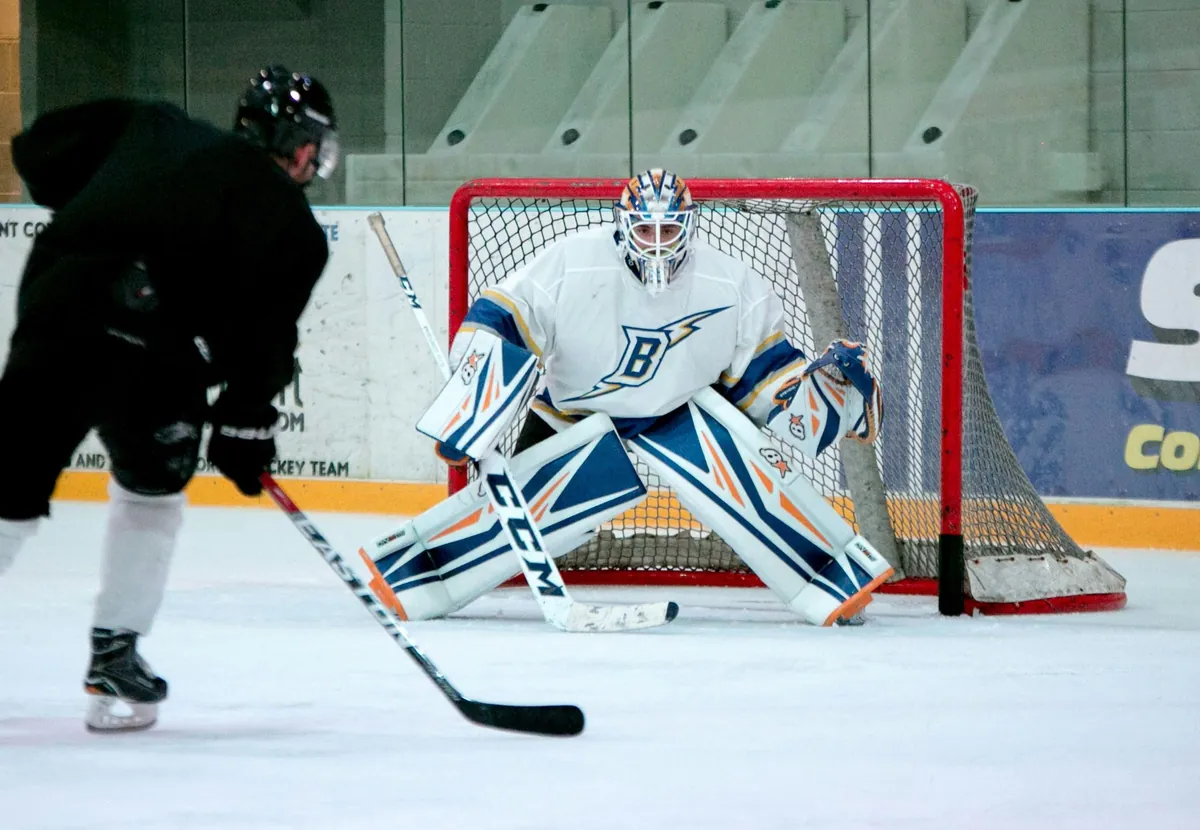
A player falls on a breakaway, the crowd screams for a penalty shot, and the referee waves play on. Hockey Canada's Rule of the Week tackled exactly that scene in November: a fall on a clear breakaway does not automatically mean a penalty shot. The call depends on four conditions, and every coach, player and parent should know them.
The question Hockey Canada answered
The November 12 Rule of the Week asks whether a fall on a clear breakaway is always a penalty shot, what separates a real foul from a simple loss of balance, and why a defender's position matters when chasing from behind. The post drew more than 2,600 views on the Minor Hockey Alliance of Ontario site, one of its most-read items of the month.
The answer is no. A player who loses an edge on their own gets nothing. A penalty shot requires a foul, and the foul has to take away the scoring chance.
The four conditions for a penalty shot
Hockey Canada's wording, as used by member leagues such as the GTHL, awards a penalty shot when a player in control of the puck, in the neutral zone or the attacking zone, with no opponent to pass other than the goaltender, is tripped or fouled from behind and prevented from getting a clear shot. The IIHF rulebook lists the same idea as four criteria.
| Condition | What the referee checks | Example that fails it |
|---|---|---|
| 1. Location | The foul happens in the neutral or attacking zone | Hooked inside your own blue line |
| 2. From behind | The foul comes from behind the puck carrier | A defender who is beside the player and lifts the stick |
| 3. Control and a real chance | The player had control of the puck, or clearly would have, and lost a reasonable chance to score | The puck was already rolling away to the corner |
| 4. Nobody to beat but the goalie | No opponent left between the player and the goaltender | A defender is still back in front of the net |
The IIHF adds an important detail: a player who still gets a shot off can still be awarded a penalty shot, if the foul took away a better chance to score.
Other plays that lead to a penalty shot
The breakaway foul from behind is the most common case, but the GTHL's summary of Hockey Canada situations lists others on a breakaway:
- a player on the ice throws a stick or an object at the puck or the puck carrier;
- a stick or object is thrown from the bench, or a player comes off the bench to interfere;
- an ineligible player interferes with the play;
- a defending player or goaltender deliberately removes mandatory protective equipment.
New for 2026-27, Hockey Canada also changed the procedure when a team refuses to start play: the old two-minute warning is gone, and the sanction is now a bench minor, or a penalty shot if it happens in the final two minutes or in overtime (Hockey Alberta).
Who takes the shot
Since the 2022-2024 rule changes, the coach or captain of the team that was fouled may pick any player other than the goaltender to take the shot. If they decline, the referee picks (Hockey Canada rule changes summary). In USA Hockey, the penalty shot is awarded in place of the minor penalty for the foul (USA Hockey casebook).
Coaching the defender who is chasing
The Rule of the Week's point about positioning is the coaching lesson. A defender who is beaten wide and chases from directly behind has only bad options: reach, hook or trip.
- Take the inside lane. Skating to the inside of the puck carrier, between the player and the net, keeps the defender beside the play instead of behind it.
- Stick on the puck side, not the body. Lifting or poking the stick from the side is legal; chopping at the hands or skates from behind is what referees punish.
- Don't give up on the play. Pressure from the side still forces a rushed shot without handing the other team a free attempt.
Coach's note: Breakaways that end in a goal against are already in your Taggley clips, since the AI cuts every goal of a game in under 40 minutes. Watch them with your defenders, then draw the backcheck-angle drill in Taggley's free drill creator on iPad so the fix is on the ice at the next practice.
Frequently asked questions
Is a fall on a breakaway always a penalty shot? No. The player must be fouled from behind, in control of the puck, in the neutral or attacking zone, with only the goaltender left to beat. A fall without a foul means play continues.
Who chooses the player who takes a penalty shot? Under Hockey Canada rules since 2022, the coach or captain of the non-offending team picks any player except the goaltender; the referee picks if they decline.
Can a player who got a shot off still get a penalty shot? Yes. Under the IIHF wording, getting a shot off does not rule out a penalty shot if the foul took away a more reasonable chance to score.
Is there also a minor penalty when a penalty shot is called? In USA Hockey, the penalty shot replaces the minor penalty for the breakaway foul. Check your league's current rulebook for other cases, such as double minors.
Sources
- Minor Hockey Alliance of Ontario – Hockey Canada Rule of the Week, November 12, 2026
- Hockey Manitoba – Hockey Canada Rule of the Week archive
- Hockey Canada – Playing Rules 2026-2028 (English PDF)
- GTHL – Situations that result in a penalty shot
- IIHF Official Rule Book 2023/24 – Penalty shot criteria
- Hockey Canada rule changes 2022-2024 – summary
- USA Hockey Rulebook – Penalty shot situations
- Hockey Alberta – Hockey Canada Playing Rule changes for 2026-27, October 19, 2026