
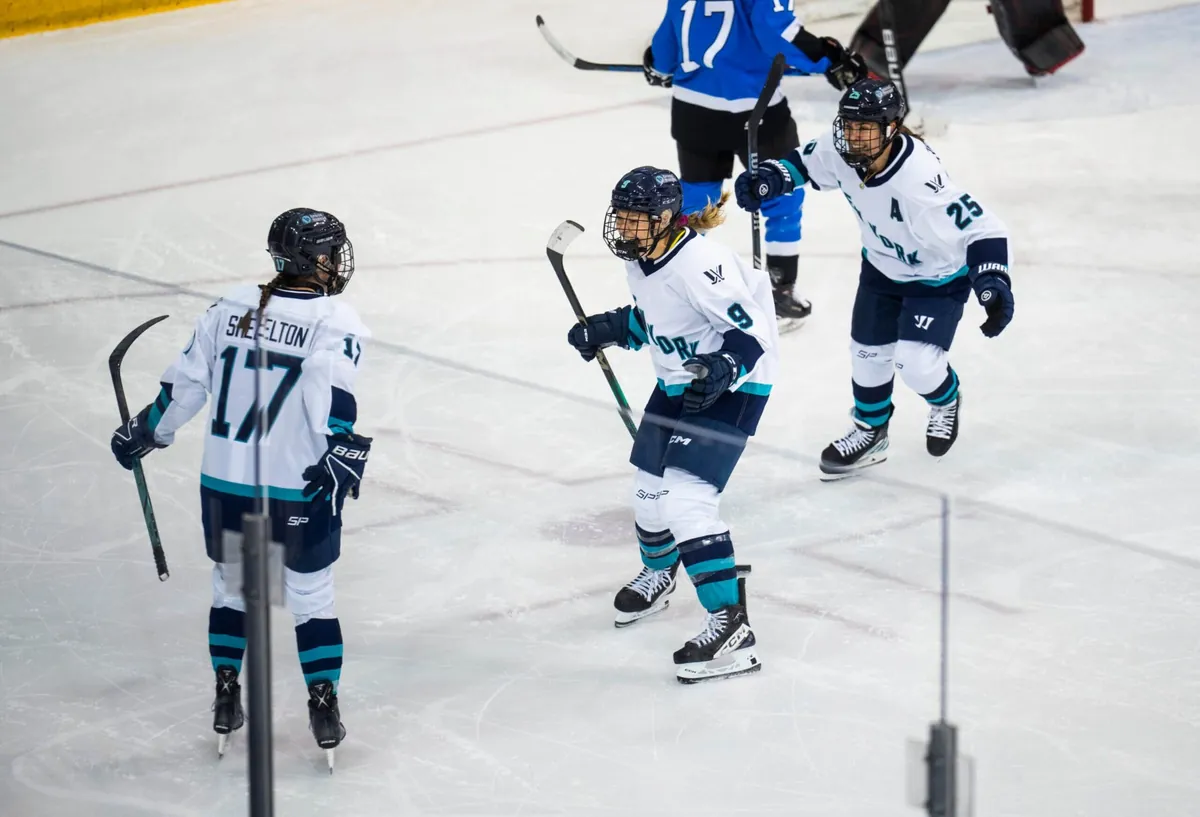
The Professional Women's Hockey League (PWHL) now requires every player, goalies included, to wear cut-resistant neck protection in games and warm-ups. The change comes as the league grows to 12 teams, with Detroit, Hamilton, Las Vegas and San Jose unveiling their names on November 10, 2026, ahead of opening weekend on December 5 and 6. In minor hockey, neck protection has been mandatory for years in Canada and since 2024 in the United States. Here is what each rulebook says.
What the PWHL changed
Under the PWHL's new Rule 9.10, all players must wear cut-resistant neck protection with a minimum cut-level score of A4 under the ANSI/ISEA standard, and A5 is preferred. It must be worn in all games, including the pre-game warm-up (PWHL). The same update allows players to bat the puck above shoulder height without a whistle.
What Hockey Canada requires in minor hockey
The Hockey Canada Playing Rules 2026-2028 are clear:
- Rule 3.6 (c): a BNQ-certified throat protector is required for players registered in minor and female hockey.
- Goalies: a goaltender who wears a throat attachment on the mask must still wear a BNQ-certified throat protector.
- Rule 3.6 (d): if a neck guard comes off during play, officials must alert the player and direct them off the ice; a player who does not comply is penalized.
- Rule 2.2 (m): an injured player who sits on the bench must still wear a BNQ throat protector, a CSA helmet and a CSA facial protector.
What USA Hockey requires
USA Hockey made neck laceration protection mandatory on August 1, 2024, for players in all age classifications except adults, in games and practices, and for on-ice officials under 18 (Massachusetts Hockey). Its Rule 304 (g) calls for a HECC-certified neck laceration protector, and BNQ-certified protectors are accepted through the 2026-27 season (USA Hockey rule summary).
| Organization | Who must wear neck protection | Standard |
|---|---|---|
| Hockey Canada | All minor and female hockey players | BNQ-certified |
| USA Hockey | All youth, girls and junior players; officials under 18 | HECC (BNQ accepted through 2026-27) |
| PWHL | All players, including goalies | ANSI/ISEA cut level A4 minimum |
Tips for parents
- Check the label. Look for BNQ certification in Canada and HECC (or BNQ until the end of 2026-27) in the US.
- Check the fit. The guard should cover as much of the neck as possible without riding up into the chin.
- Replace damaged guards. Torn or stretched protectors lose their protection.
- Make it a habit at practice too. USA Hockey's rule covers practices, and the safest habit everywhere is to wear it every time on the ice.
Coach's note: Equipment is the first line of defence; positioning is the second. Taggley's AI cuts every clip of a game in under 40 minutes, so coaches can show players the net-front scrambles and goalmouth pileups where skates and sticks come up, and teach them to keep their head up and stay on their feet.
Frequently asked questions
Are neck guards mandatory in minor hockey in Canada?
Yes. Hockey Canada Rule 3.6 (c) requires a BNQ-certified throat protector for all players registered in minor and female hockey.
Are neck guards mandatory in USA Hockey?
Yes, since August 1, 2024, for all players except adults, in games and practices, and for on-ice officials under 18.
Does the PWHL require neck guards?
Yes. Starting in the 2026-27 season, all PWHL players, including goalies, must wear cut-resistant neck protection with a minimum ANSI/ISEA cut level of A4 in games and warm-ups.