
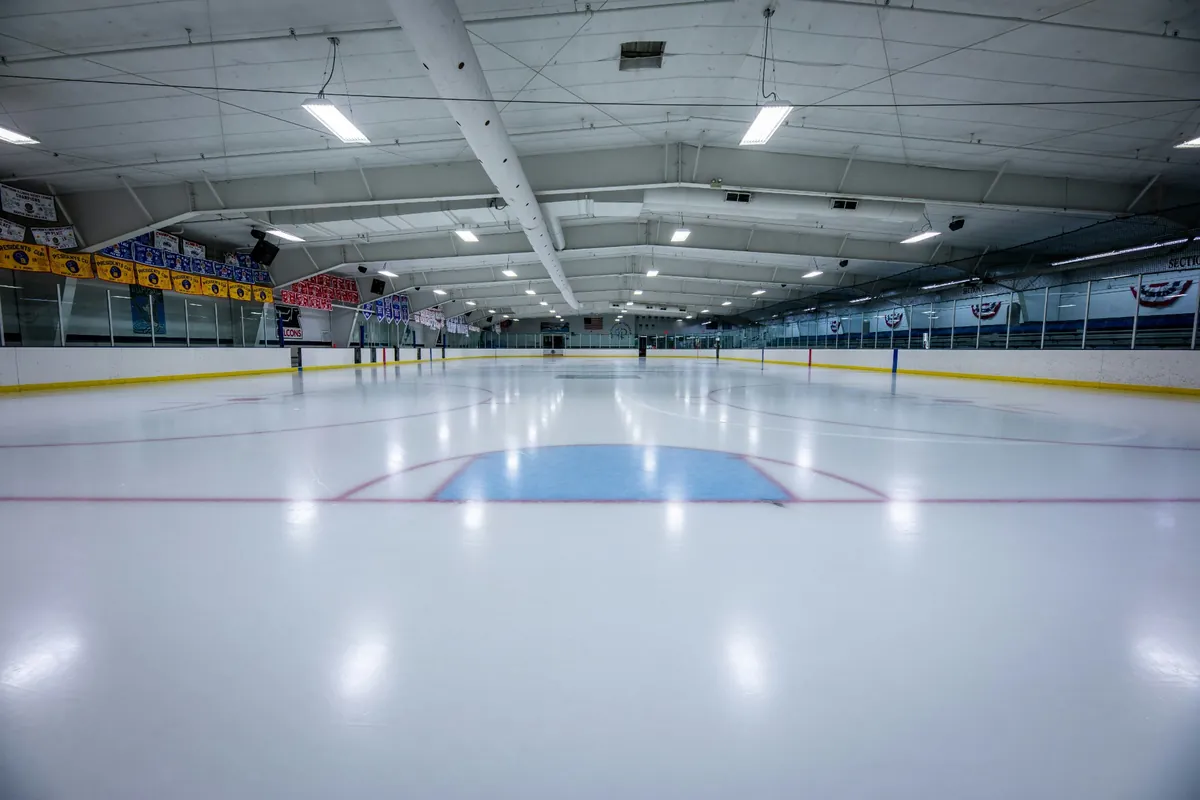
Hockey Saskatchewan will keep U9 hockey on half-ice this season, but on November 16 it opened a door: on three weekends in 2027, carded U9 teams may choose to play full ice instead. The pilot follows a member survey, and the results will shape U9 hockey in the province for 2027-28. Here is what changes, how it compares with Hockey Canada's standard, and what the research says about small ice.
What Saskatchewan changed
The amendment to Regulation 6.04.13 b) ii) applies for the rest of the 2026-27 season (Hockey Saskatchewan memo).
| Item | What the memo says |
|---|---|
| Default | All U9 games are played half-ice |
| Full-ice option | Second weekend of January, third weekend of February and last weekend of March 2027, teams may choose full ice or half ice |
| Which games | Exhibition and tournament games only, on those three weekends |
| Carded team deadline | Extended to 5 p.m. on Friday, November 20, 2026 |
| Follow-up | A new member survey in the first two weeks of April 2027 |
| Under review for 2027-28 | Faceoffs after every goal, consistent U9 rules for half-ice games, modified penalty procedures and a standard net size |
An earlier memo also moved the start of U9 and U11 exhibition, tournament and league games from November 15 to November 1 for this season (Hockey Saskatchewan).
How it compares with Hockey Canada's U9 standard
Hockey Canada's U9 program sets the national frame (Hockey Canada U9 seasonal structure):
- Surface: half-ice, at most 100 by 85 feet, 4-on-4 plus goaltenders, two games at once.
- Age split: seven-year-olds play half-ice all season; eight-year-olds play half-ice from October to December and may move to full ice on December 26 or later.
- Game rules: no icing or offside, shifts no longer than two minutes, no score kept and no playoffs.
- Ice time: fair and as close to equal as possible, and coaches may not shorten the bench to win.
Saskatchewan's model stays closer to Hockey Canada's full-season half-ice option, with three optional full-ice weekends as a test.
What the research says about small ice
Most of the data comes from cross-ice play, an even smaller surface than half-ice, at USA Hockey's 8U level. An NHL analytics team compared 8U cross-ice and full-ice games for USA Hockey's American Development Model (USA Hockey ADM).
| In cross-ice games, compared with full ice, each player had... | Multiplier |
|---|---|
| Puck touches | 2x |
| Pass attempts | 2x |
| Changes of direction | 2x |
| Puck battles | 2x |
| Passes received | 5x |
| Shots attempted | 6x |
A study in Alberta found 8U players accelerated 10% faster in cross-ice games and reached top speed in 65 feet or less (USA Hockey ADM). In an Ontario Hockey Federation study using Hockey Alberta data, full-ice games had a slightly higher average speed, but observers saw more players chasing the puck carrier and fewer puck touches (OHF speed study).
What coaches and parents can watch on full-ice weekends
- Count puck touches, not goals. The point of U9 is repetition. Watch how often each child handles the puck in each format.
- Keep shifts short. Hockey Canada caps U9 shifts at two minutes; on a full sheet, legs tire faster.
- Answer the April survey. Saskatchewan built this pilot from member feedback, and the next decision will come from the same place.
Coach's note: This pilot is a rare chance to compare both formats with the same kids. Taggley accepts game footage from a phone, LiveBarn and other cameras, so a coach can film one half-ice game and one full-ice weekend game and watch them side by side. Then build the small-area games your players need in Taggley's free drill creator.
Frequently asked questions
What is half-ice hockey? U9 games played on half of a rink, at most 100 by 85 feet, with 4-on-4 play and two games running at once, under Hockey Canada's U9 program.
When can U9 players play full ice? Under Hockey Canada's model, eight-year-olds may move to full ice on December 26 or later, while seven-year-olds stay on half-ice all year. In Saskatchewan this season, carded teams may choose full ice on three weekends in January, February and March 2027.
Why do governing bodies push half-ice and cross-ice hockey? Studies for USA Hockey found twice as many puck touches and six times as many shots per player in cross-ice games compared with full ice.
Is the score kept in U9 hockey? No. Hockey Canada's U9 program keeps no score and has no playoffs.
Sources
- Hockey Saskatchewan – MEMO: U9 Gameplay Regulation Changes, November 16, 2026
- Hockey Saskatchewan – MEMO: U9 and U11 game play start date change
- Hockey Canada – Under-9 seasonal structure and game play guidelines
- USA Hockey ADM – cross-ice hockey statistics
- Ontario Hockey Federation – On-ice study: smaller ice surfaces and skating development