
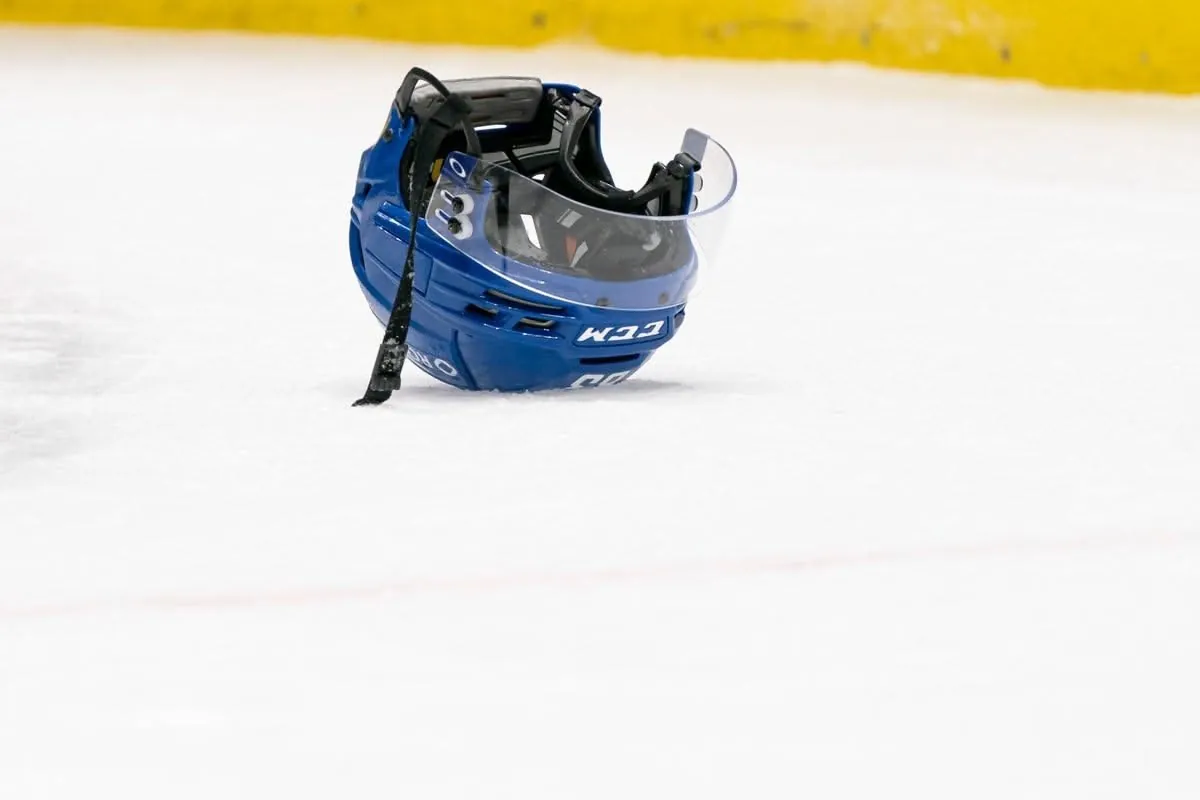
Compilations of big hits in minor hockey games are drawing tens of thousands of views on TikTok in Québec's Côte-Nord region, Le Manic reported on November 24, 2026. The trend rewards the wrong thing. In Hockey Canada's teaching model, checking is a skill used to regain control of the puck, and the players who check well are the ones who read the play, not the ones chasing a clip.
What happened on the Côte-Nord
According to Le Manic, TikTok accounts using the names and logos of Côte-Nord minor hockey teams post compilations of big hits, mostly from U15 (M15) games. Some posts passed 30,000 views, with comments cheering the hits and trading insults between teams. Parents described a player prouder of a hit than of two goals, and another who had two concussions in a few months. A former coach said most clips came from simple-letter divisions, where body checking is not allowed.
Hockey Côte-Nord president Billy Leonard told Le Manic that the federation has known about these accounts since last year, has spoken with players, parents and associations, and is considering talks on respect, bullying and online behaviour.
Why likes reward the wrong play
Mental performance coach and kinesiologist Marc-Antoine Roussel told Le Manic that teenagers look for approval online, and that likes and shares reward risky plays. On some teams he works with, 50% to 70% of players are afraid of body checks, and he has met players who quit hockey at 14 after a hit. His advice: praise effort and team play, not the size of the collision.
Checking in Hockey Canada's model: four steps
Hockey Canada calls checking a critical skill that, done properly, can create scoring chances or help a team regain control of the puck. Its NCCP model teaches it in four steps, starting the first time a child steps on the ice.
| Step | What players learn | The hockey IQ behind it |
|---|---|---|
| 1. Positioning and angling | Force the puck carrier where you want | Read the play, take away time and space |
| 2. Stick checks | Poke, lift and press checks | Timing, stick on puck |
| 3. Contact confidence and body contact | Give and absorb contact safely | Balance, body position |
| 4. Body checking | Separate the opponent from the puck | Choose when a check helps the team |
In Québec, Hockey Québec requires checking training for double- and triple-letter players, while body contact training is optional in simple-letter classes.
What the research says about hits at 13 and 14
A University of Calgary study led by Dr. Carolyn Emery, published in the British Journal of Sports Medicine, found that disallowing body checking in non-elite leagues for 13- and 14-year-olds was associated with a 56% lower injury rate. Earlier research linked to Hockey Canada's 2013 peewee ban found 64% fewer concussions.
How coaches can teach checking as hockey IQ
- Grade the outcome, not the noise. After every battle: did we come away with the puck?
- Teach angling first. Steer the puck carrier toward the boards and close the gap before thinking about contact.
- Set a team rule on social media: no posting hit videos of teammates or opponents.
Coach's note: A hit clip gets likes. A teaching clip makes better players. With Taggley, the AI cuts every goal, faceoff, power play and penalty kill of a game in under 40 minutes, and the coach can cut a player's shifts with a quick roster-based tool to review puck battles: the angle, the timing, and whether the team won the puck.
Frequently asked questions
At what age is body checking allowed in minor hockey?
In Hockey Canada, full body checking is not permitted until U15 at most intermediate and competitive levels. Rules vary by province and class, so check with your association.
Is body checking in minor hockey dangerous at 13 and 14?
A University of Calgary study found a 56% lower injury rate in non-elite leagues for that age group where body checking was not allowed.
What should parents do about hit videos of their child online?
Talk with your child, then with the coach and the association. In Québec, concerns can also be reported to the Protecteur de l'intégrité en loisir et en sport.